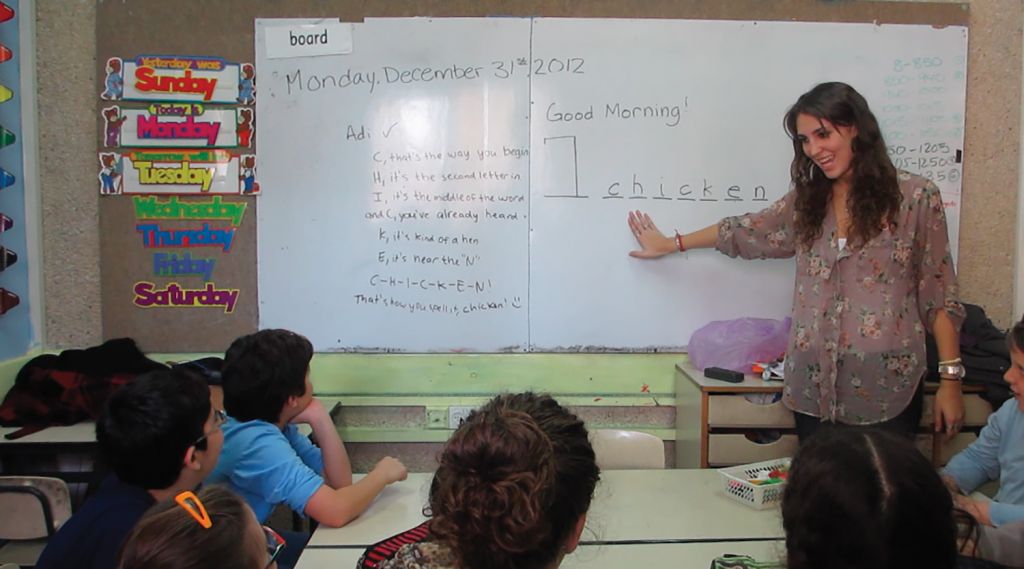
Teaching is often described as both an art and a science. For centuries, the public perception of an educator was a solitary figure standing at the front of a room, imparting knowledge to a passive audience. However, the realities of the contemporary classroom have shattered this archaic archetype. Today, effective teaching requires a sophisticated synthesis of cognitive psychology, data analysis, cultural competency, and technological literacy.
As society becomes more interconnected and the global economy shifts toward highly automated, knowledge-based industries, the role of the teacher has evolved. Educators are no longer the gatekeepers of information; information is ubiquitous and accessible with a single click. Instead, modern teachers act as architects of intellectual experiences, designing environments where students learn how to think critically, evaluate evidence, collaborate dynamically, and navigate ambiguity.
The Foundations of Cognitive Pedagogy
To understand effective teaching, one must first explore how the human brain processes and retains information. Modern pedagogy has discarded the idea that students are empty vessels waiting to be filled. Instead, cognitive science demonstrates that learning is an active, iterative construction process.
-
Activating Prior Knowledge: Before a new concept can be absorbed, the brain must anchor it to an existing mental framework, known as a schema. Effective teachers begin lessons by prompting students to recall what they already know about a topic, creating a conceptual bridge that makes new data meaningful.
-
Managing Cognitive Load: The human working memory is remarkably finite. If an instructor introduces too much complex information simultaneously, the student experiences cognitive overload, resulting in frustration and a breakdown in retention. Strategic educators chunk information into digestible pieces, provide guided practice, and gradually release responsibility to the learner.
-
The Power of Retrieval Practice: Long-term retention is not achieved by repeatedly reading a textbook chapter or re-listening to a lecture. It occurs when the brain is forced to actively retrieve information from memory. Frequent, low-stakes quizzes, flashcards, and concept mapping are pedagogical tools engineered to strengthen these neural pathways.
By aligning instructional strategies with the biological realities of memory and cognition, teachers transform learning from a temporary performance into permanent, transferable knowledge.
The Triad of Modern Assessment Strategies
A critical component of teaching is determining whether learning has actually occurred. In the past, assessments were almost exclusively summative, taking the form of high-stakes midterms or final exams that evaluated students at the very end of a unit. While summative assessments remain necessary for institutional tracking, the modern educational landscape elevates the importance of formative and diagnostic evaluation.
Diagnostic assessments occur before instruction begins. They allow a teacher to identify hidden knowledge deficits, misconceptions, and individual starting points across a diverse student body. Operating without this diagnostic data is equivalent to a physician prescribing medication without running diagnostic blood work.
Formative assessments happen in real time throughout the instructional cycle. These are low-stakes, ongoing checks for understanding, such as exit tickets, think-pair-share discussions, and digital polling tools. Formative data provides an immediate feedback loop. If a teacher notices that sixty percent of the class misunderstood a core principle during a mid-lesson check, they can immediately pivot, alter their analogy, and clarify the misconception before moving to more advanced concepts. This prevents minor misunderstandings from compounding into insurmountable learning barriers.
Cultivating the Inclusive and Culturally Responsive Classroom
The modern classroom is a vibrant mosaic of diverse cultural backgrounds, socioeconomic realities, and neurodivergent learning profiles. Teaching effectively in this environment requires an intentional shift toward culturally responsive pedagogy and universal design frameworks.
Culturally responsive teaching rejects the colorblind approach to education. Instead, it recognizes that a student’s cultural background profoundly shapes how they communicate, process information, and engage with authority. By integrating diverse perspectives, literature, and real-world examples into the core curriculum, teachers make the academic environment mirrors where students see their identities validated, rather than walls that isolate them.
Simultaneously, educators utilize the principles of Universal Design for Learning to accommodate varied cognitive needs without lowering academic standards. This framework assumes that barriers to learning exist within the design of the environment and curriculum, not within the student.
To implement this, teachers offer multiple means of engagement to capture diverse interests, multiple means of representation to present information through text, audio, and visual mediums, and multiple means of action and expression, allowing students to demonstrate their mastery through portfolios, presentations, or traditional essays.
The Symbiosis of Technology and Human Mentorship
The integration of technology into education has often been polarizing. Some view it as a panacea that will automate instruction, while others see it as a constant source of cognitive distraction. The reality of effective teaching lies in a balanced, symbiotic approach where technology serves as an amplifier of human capability, not a replacement for it.
Artificial intelligence, learning management software, and adaptive digital platforms excel at personalizing mechanical and diagnostic tasks. These tools can automatically grade repetitive worksheets, generate customized practice algorithms for mathematics, and provide immediate feedback on grammatical structures.
When technology assumes these administrative and rote tasks, it liberates the teacher’s time. This time can then be reinvested into what machines cannot replicate: deep, qualitative human mentorship.
Liberated educators can hold small-group interventions, facilitate intense collaborative debates, provide nuanced feedback on creative writing portfolios, and offer crucial emotional support to students navigating personal crises. The future of teaching is not automated; it is humanized by technology.
Professional Reflection and the Teacher-Researcher Model
Great teachers are not born; they are iteratively built through consistent, disciplined professional reflection. The most impactful educators approach their classrooms with the mindset of an active researcher. They do not treat curriculum documents as static scripts to be repeated year after year.
Instead, they treat every lesson as an educational experiment. They gather data, observe student behavior, evaluate engagement metrics, and critically analyze their own performance. If a specific lesson fails to resonate, they do not blame the students’ capabilities. Instead, they examine their instructional architecture, refine their presentation strategies, seek peer feedback, and try again.
This dedication to continuous professional growth is what elevates teaching from a routine civic job into a highly complex, dynamic profession. It ensures that educators remain as intellectually curious as the students they are charged with inspiring, keeping the engine of education relevant, vibrant, and profoundly transformative.
FAQs
What is the difference between pedagogy and andragogy in the context of teaching?
Pedagogy refers explicitly to the strategies, methods, and philosophies used to teach children. It typically assumes that the learner is dependent on the instructor for direction and structure. Andragogy, conversely, is the practice of facilitating learning for adults. It recognizes that adult learners are self-directed, possess a wealth of lived experience that serves as a resource for learning, and are motivated by immediate, real-world applications of knowledge.
How do effective teachers handle behavioral disruptions without compromising class time?
Modern classroom management relies on proactive relationship building and structural predictability rather than reactive punishment. Effective educators establish clear, consistent routines from day one, minimizing transitions where disruptions typically occur. When behavior issues arise, they utilize low-profile interventions, such as physical proximity, non-verbal cues, or quiet, individualized conversations, addressing the root cause of the behavior without disrupting the cognitive flow of the entire class.
How can a teacher ensure fair grading when evaluating subjective assignments like art or creative writing?
To maintain objectivity and transparency when grading subjective work, teachers utilize detailed, analytical rubrics. A rubric breaks down a complex project into distinct, measurable criteria, such as structural technique, conceptual originality, execution, and adherence to constraints. Each criterion is accompanied by specific performance descriptors for various grade levels, ensuring that evaluation is tied to clear benchmarks rather than the instructor’s personal aesthetic preferences.
What is scaffolding in education, and how is it implemented practically in a lesson?
Scaffolding is a teaching strategy that provides temporary support to students as they learn a new, complex concept, much like physical scaffolding supports a building during construction. Practically, a teacher implements this by first modeling a task explicitly, doing it together with the class, allowing students to practice in collaborative pairs, and finally having them complete the task independently. As the student’s competence grows, the teacher systematically withdraws the instructional supports.
How do educators balance the demands of standardized state testing with rich, creative learning?
Exceptional teachers avoid treating standardized test preparation as a separate, isolated entity. Instead, they embed the analytical skills, reading comprehension techniques, and mathematical stamina required for testing directly into deep, project-based learning units. By focusing instruction on high-level critical thinking and conceptual mastery, students naturally develop the cognitive flexibility required to perform well on standardized exams without sacrificing creativity.
What is differentiation, and how does it differ from tracking or grouping students by ability?
Differentiation involves modifying the content, process, products, or learning environment to accommodate the diverse readiness levels and interests of students within the same heterogeneous classroom. Tracking, on the other hand, is the institutional practice of permanently sorting students into entirely separate classes based on perceived ability. Differentiation maintains high expectations for all students while providing varied pathways and supports to help everyone achieve mastery.